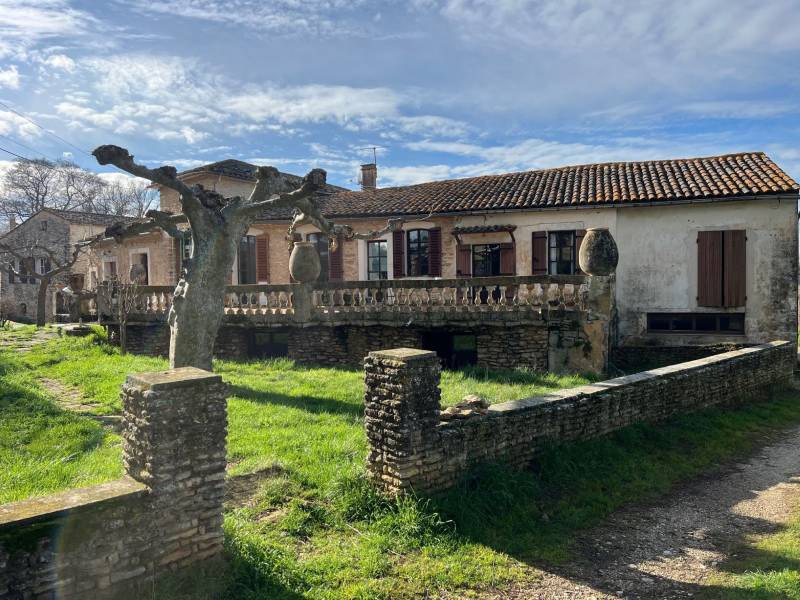
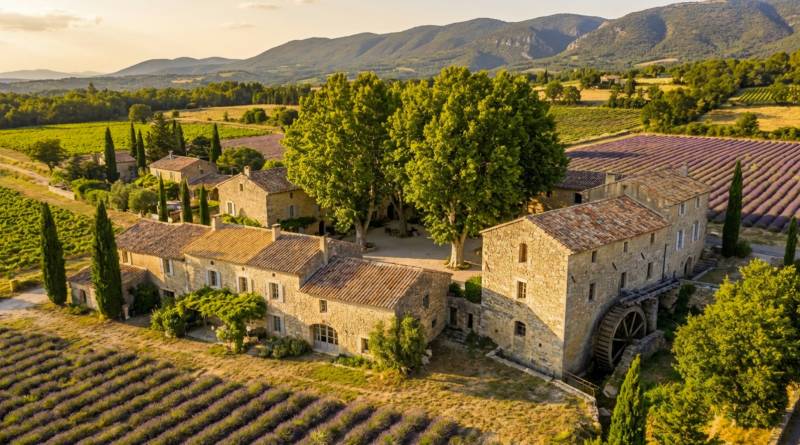
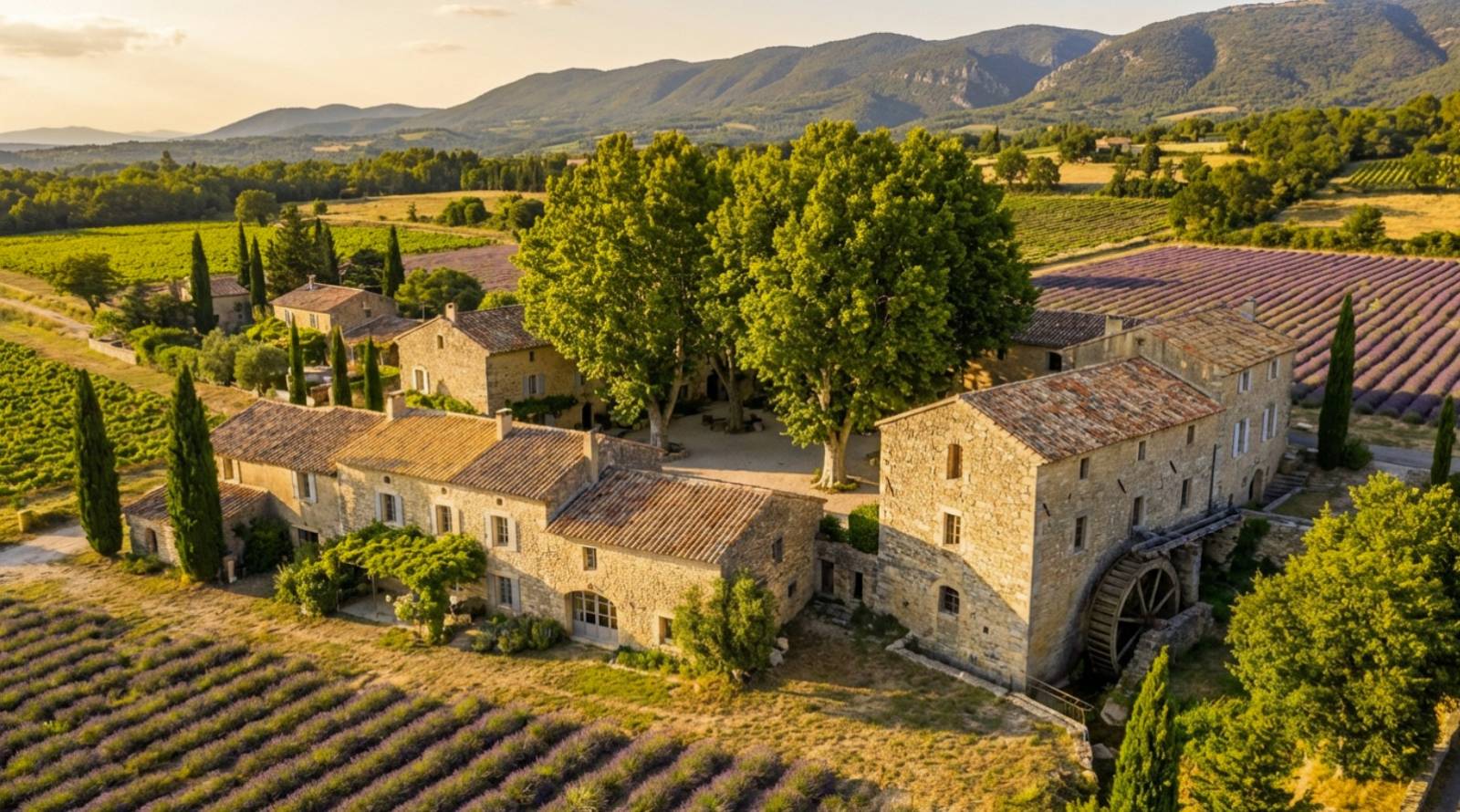
A hamlet in the Luberon? We have just sold a magnificent one in Saignon. An old mill, three dwellings, swimming pool, nearly four hectares. The sort of property one never sees listed online because it sells beforehand.
Since 1984, we have been traversing these villages. We know the proprietors, the heirs uncertain what to do with the family estate, the notaries who contact us before publishing announcements. When a hamlet becomes available, we are often aware before it is officially placed on the market.
Why "hamlet"? Because it is not a single house but rather several buildings grouped together. The principal old mill, the miller's house, the sheepfold converted into a guest house, the stable that can still be transformed. Stone walls two or three centuries old, lands that nourished entire families.
The Luberon, where the finest hamlets lie hidden
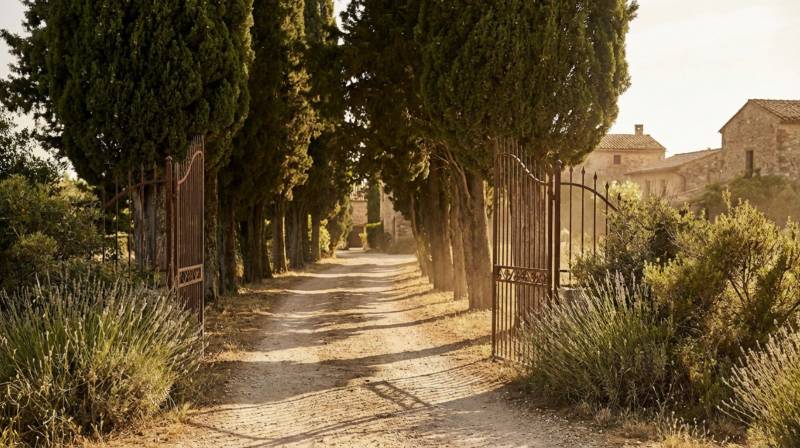
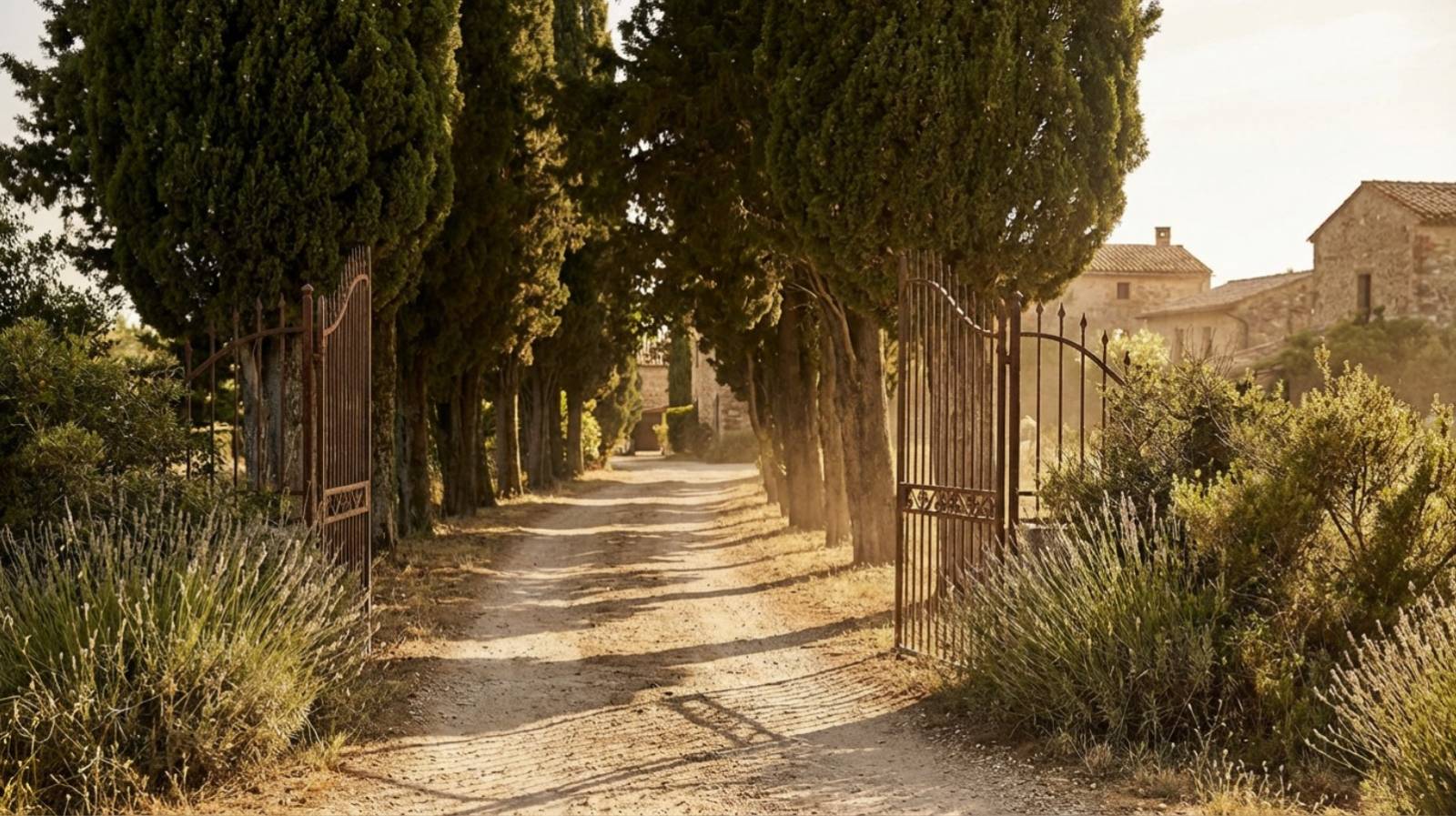
The Luberon and Vaucluse shelter some of the most beautiful hamlets in France. Not those we observe from the road. Those concealed at the end of an earth track, behind a curtain of cypress trees, nestled in a hollow where a spring flows.
These Provençal lands have preserved their dry-stone buildings, their roofs of Roman tiles patinated by time, their mas where three generations have succeeded one another. We discover them for you, often before they even reach the market.
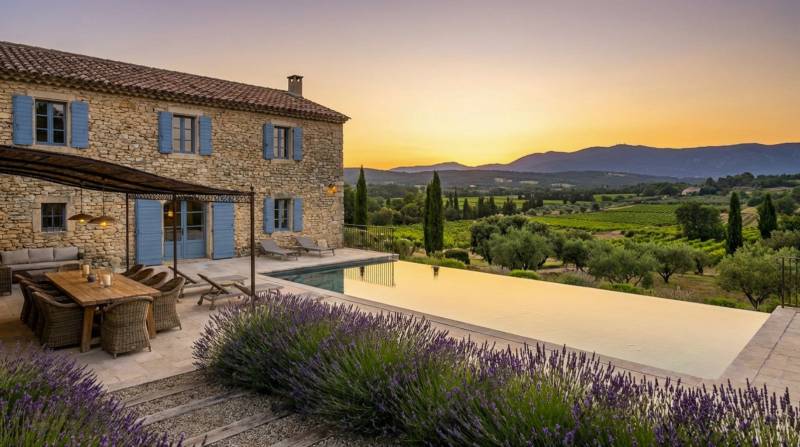
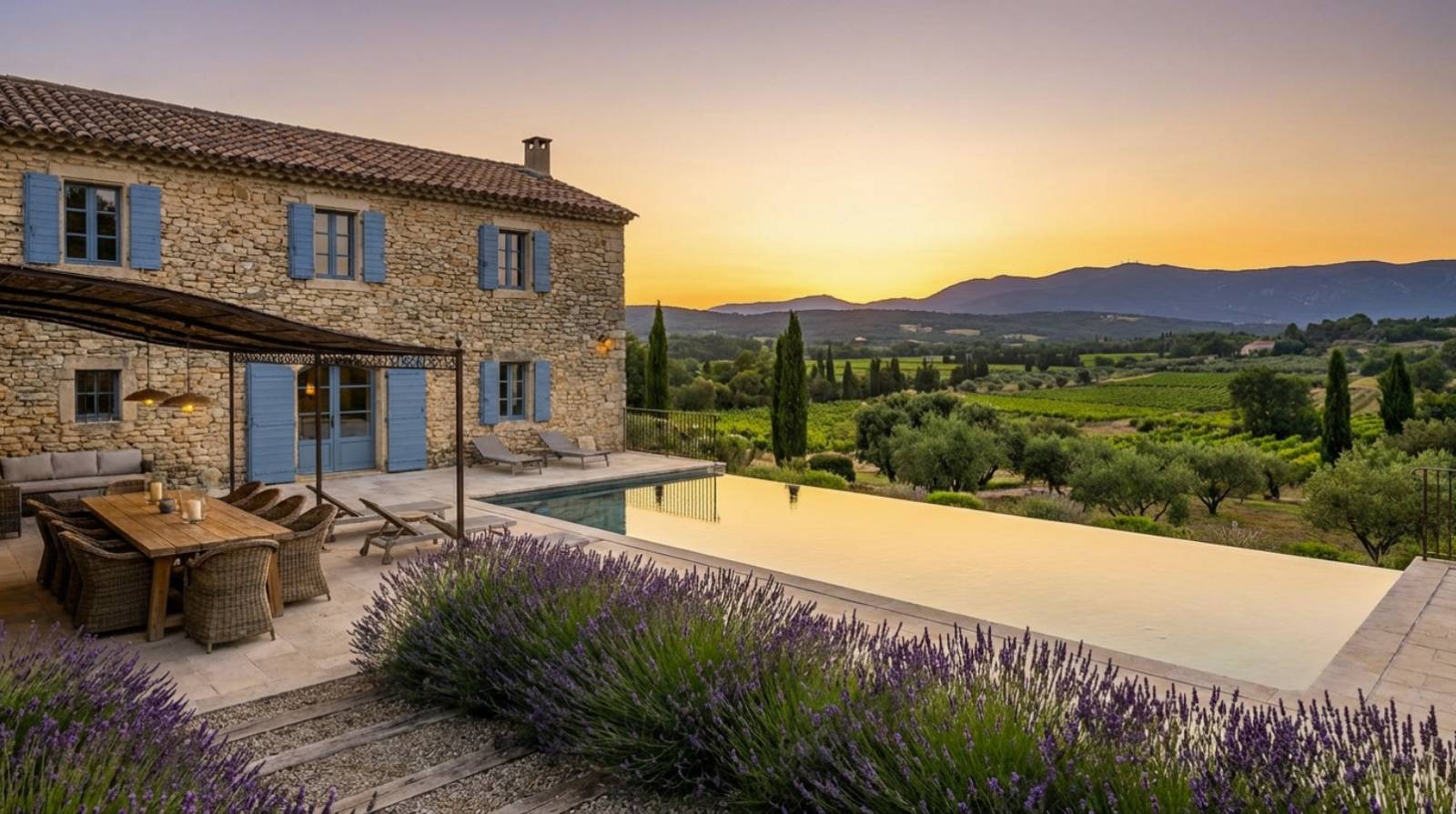
Our hamlets are situated near villages that the entire world envies: Gordes perched upon its rocky spur, Ménerbes which inspired Picasso, Bonnieux with its stepped lanes, Roussillon and its flamboyant ochres, Saignon suspended above Apt. From their terraces, we contemplate the Luberon massif, the undulating vineyards, the lavender fields turning violet in July.
When an 18th-century mill becomes a family estate
We recently accompanied our clients in acquiring a remarkable hamlet in Saignon, fifteen minutes from Bonnieux. This property exemplifies precisely the type of estate we seek for our clientele.
The heart of the estate was this 18th-century mill. On the ground floor, a spacious salon with integrated kitchen opened onto a dining room, then a second salon with its period fireplace where the proprietor had installed his study. Two bedrooms and two bathrooms completed this level.
Upstairs, accessible via a stone staircase worn by centuries, we found a television room, a bedroom and a bathroom. But the most astonishing feature lay beneath: an entire duplex carved into the rock. Living room, open kitchen, dining room, salon with fireplace, two bedrooms, a large dormitory for children, a bathroom. And at the very bottom, a magnificent vaulted cellar where time appeared to have stood still.
A first independent stone house sheltered two bedrooms with their bathrooms. Perfect for visiting friends or grown children.
The second, rebuilt in 1970 but with respect for Provençal proportions, offered a salon with fireplace, four bedrooms, one bathroom and three shower rooms. Its garage could accommodate two cars.
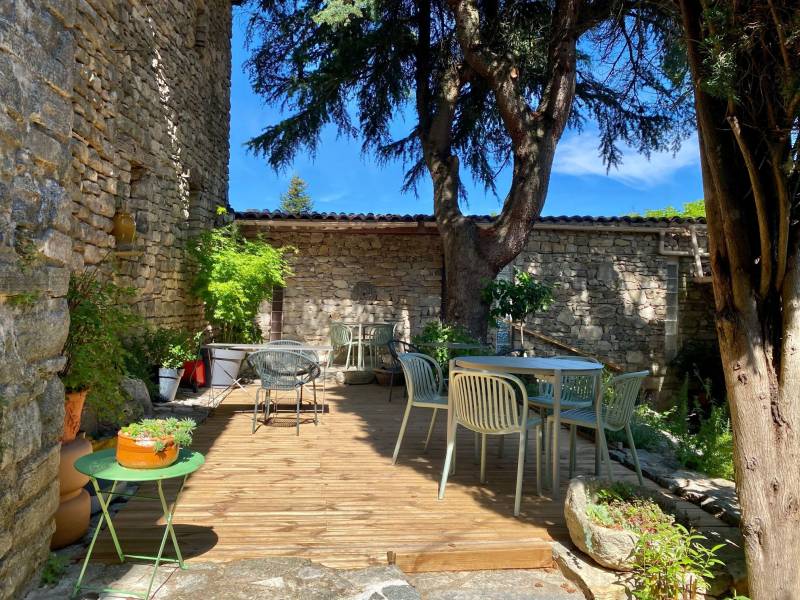
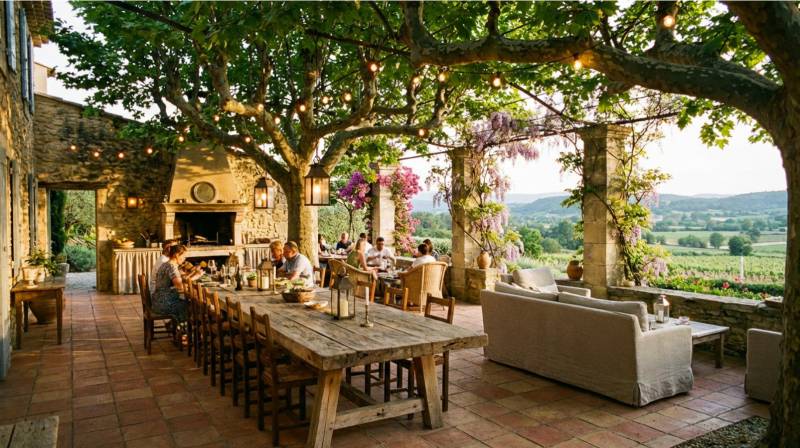
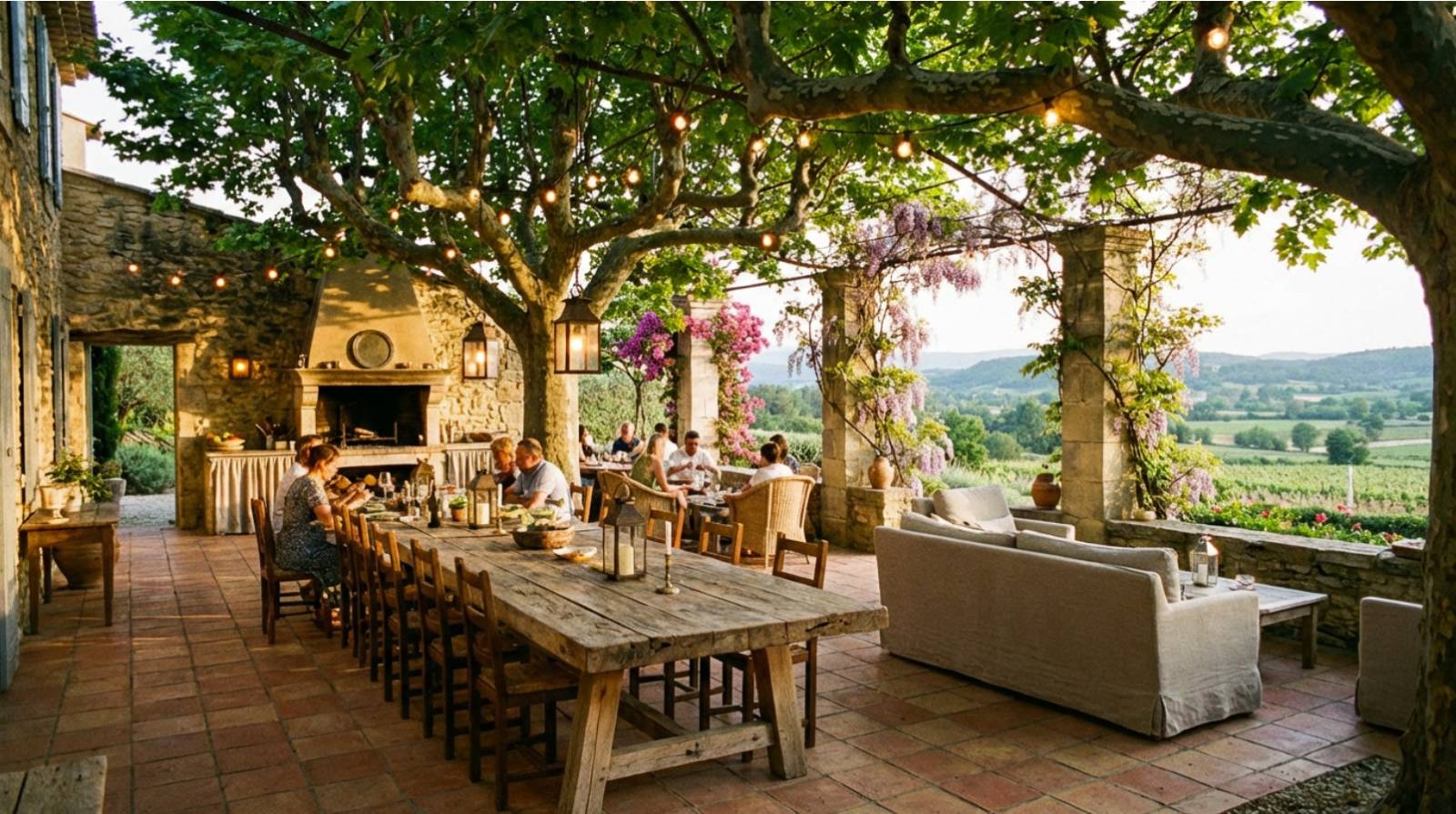
Two covered terraces. On the first, a summer salon protected from the mistral. On the second, an immense table seating fifteen guests, with its integrated stone barbecue.
The swimming pool measured 18 metres by 5. With its pool house, it dominated the valley. The new proprietors recounted their first plunge at sunset, the Luberon turning rose on the horizon.
The stable contained four boxes. The former owners had kept their horses there. The new ones contemplate installing a pottery workshop.
And then there were the 3.6 hectares. Fields where a few goats now graze, a small pond fed by a spring that sings throughout the year, meadows, fragrant garrigue. Sufficient space to lose oneself at home for hours.
This hamlet suited a large family. But it could equally well have become a high-end guest house, a venue for countryside seminars, an estate for weddings beneath the plane trees. Each hamlet carries within it a thousand possible lives.
Because it represents far more than a property investment
A hamlet is the elegant solution for expanding families. Your children in one house, yourself in another, your parents in the third. Each with their intimacy, their kitchen, their terrace. And on Sundays, everyone gathers beneath the great linden tree for the interminable lunch.
Our clients recount those summers when grandchildren run from one house to another, those harvests when the entire tribe mobilises, those Christmases when twenty persons sleep on the estate without crowding one another.
Charm tourism is flourishing in France. Travellers have wearied of standardised hotels. They seek authenticity, personalised welcome, places steeped in history.
A restored hamlet becomes a prestige guest house where each chamber possesses its character. Or a unique reception venue for unforgettable weddings. Or indeed a seminar space for enterprises seeking meaning and beauty.
We regularly accompany clients in these conversions. One created five certified luxury gîtes. Another organises yoga retreats. A third welcomes artists in residence.
Owning a hamlet means reconnecting with a forgotten rhythm. Planting one's kitchen garden, pruning one's olive trees, harvesting one's vines, gathering apricots from one's centuries-old trees. Raising a few chickens, perhaps sheep that naturally maintain the meadows.
It means living by the rhythm of the seasons, far from the permanent noise of cities. It means watching one's children climb trees, build huts, learn whence food originates.
Authentic stone hamlets are becoming scarce. Many have been abandoned, others destroyed, some disfigured by clumsy renovations. Those that endure, restored with respect for heritage, appreciate in value each year.
In sought-after regions such as the Luberon, it represents a secure investment. But above all, it is heritage to transmit. Our clients often tell us: "This is for my grandchildren. So they might have roots somewhere."
Because purchasing a hamlet resembles no other transaction
The hamlet of your dreams is probably not in any shop window. It still belongs to a hesitant family, to heirs uncertain what to do with it, to a proprietor awaiting the right purchaser.
Forty years of presence in the Luberon have woven us an incomparable network. Notaries contact us before publishing announcements. Local families approach us for discreet valuations. We know what will become available before anyone else.
You explain what you seek, we embark on exploration. Sometimes it takes three months, sometimes a year. But we invariably succeed in finding.
A hamlet is not simply square metres. It is the quality of restoration already undertaken, the extent of remaining works, the authorisations we may or may not obtain, the solidity of frameworks, the condition of roofs, the viability of outbuildings.
We visit with you. We examine beams, we test wall humidity, we assess electrical installations. We introduce you to architects specialising in Provençal heritage, craftsmen who know how to restore in the traditional manner.
You will understand your commitment. The comprehensive, realistic budget. Probable timescales. Pitfalls to avoid.
You wish to create gîtes? We know the tourism accommodation standards, the procedures for obtaining classifications, average profitability in the sector.
You envisage hosting weddings? We know which communes are flexible regarding event authorisations, which local caterers are excellent, how to manage neighbourly relations.
You simply wish to live there as a family? We present the international schools in the area, English-speaking physicians, local commerce, village associative life.
Our work does not cease at the notary's office. You will require a landscape gardener who understands Provençal gardens, a reliable pool specialist to renovate the basin, a joiner capable of restoring antique shutters.
We establish connections. We monitor works if you wish. We respond to your questions even two years after purchase. Because for us, making you fall in love with a hamlet is merely the beginning of the story.
Provence remains the sovereign region
Saignon, Apt, Bonnieux, Ménerbes, Gordes, Roussillon, Oppède, Lacoste... These names inspire dreams worldwide. But hamlets are not found within the villages, they conceal themselves in their surroundings.
At the turn of a path ascending through the garrigue. At the end of an avenue of centuries-old plane trees. In a secret valley where a stream flows. These hamlets, invisible from the roads, preserved from mass tourism, we know stone by stone.
The Monts de Vaucluse, the Sault region, the foothills of Ventoux also harbour magnificent rural ensembles. Often more affordable than in the Luberon proper, with spectacular views of Provence's emblematic mountain.
Lavender grows at altitude there, the climate is cooler in summer, authenticity even more preserved. We regularly discover hamlets there for clients seeking greater calm, more nature, more space.
Thirty or forty kilometres from Aix-en-Provence, we still find accessible hamlets. The advantage? Proximity to a genuine cultural city. Opera, museums, starred restaurants, TGV to Paris, international airport at Marignane.
It is the ideal compromise for those desiring authentic countryside without entirely renouncing urban life.
Figures reflecting rarity
In the Luberon and Vaucluse, a hamlet comprising several dwellings with its lands generally negotiates between 1.5 and 5 million euros. Sometimes more for exceptional ensembles completely restored with commanding views.
The state of restoration first. A turnkey hamlet, where everything has been redone with taste and respect for heritage, is evidently worth more than an ensemble requiring complete restoration.
Total habitable surface next. Three houses totalling 400 m² or 800 m² do not compete in the same category.
Extent of lands. Two hectares or twenty hectares, it is not the same estate, nor the same maintenance, nor the same possibilities.
The view. From certain hamlets, we embrace the entire Luberon. From others, we nestle in a sheltered valley. Both possess their charm, but purchasers pay dearly for panoramas.
Precise location. Ten minutes from Gordes or forty minutes from Apt, accessibility and prestige differ.
Exploitation potential. A hamlet already arranged as gîtes with all amenities is worth more than a family estate without tourism authorisation.
To the purchase price are added notary fees (approximately 7-8% on existing properties), annual property tax (sometimes substantial on large estates), maintenance of buildings and lands.
If works are necessary, calculate generously. Restoration respecting heritage is expensive. Qualified craftsmen are rare. But the result is worth the investment.
We assist you in establishing a realistic budget. No unpleasant surprises six months after purchase.
The Saignon hamlet we presented has found its new proprietors. But at this very moment, we are prospecting for other clients. We walk along earth paths searching for a rusty gate, a forgotten mas, a farm no one has visited for ten years.
Some of these hamlets will never be announced anywhere. They will pass directly from one proprietor to a purchaser we shall have presented at the opportune moment.
Contact us at +33 (0)4 90 72 38 40
Share your project with us. How many houses do you envisage? What budget do you contemplate? What you wish to create: a family refuge, a hospitality project, a creative retreat far from everything?
We genuinely listen. Then we set out to search. And when we have found it, we shall telephone you to say: "I have something for you. Come and see."
If you own a hamlet in Provence and are considering selling, let us discuss it over coffee.
We travel to you. We take time to understand the site's history, to evaluate each building, to measure potential. We appraise your property with precision, drawing upon our intimate knowledge of the market.
Our international clientele, often affluent and discerning, seeks precisely this type of rare property. We know how to present them, enhance their value, narrate their story so they touch the right purchasers.
Request your complimentary valuation
L'Immobilière du Luberon
Specialists in prestige property in Provence for over 40 years
Sale of hamlets, Provençal mas, bastides, character properties in the Luberon and Vaucluse